Delhi PG Crisis: How Digital Marketing Can Help Students Find Safer Accommodation
Delhi PG Crisis: How Digital Marketing Can Help Students Find Safer Accommodation Table of Contents Quick Summary Delhi’s PG crisis has raised concerns about student
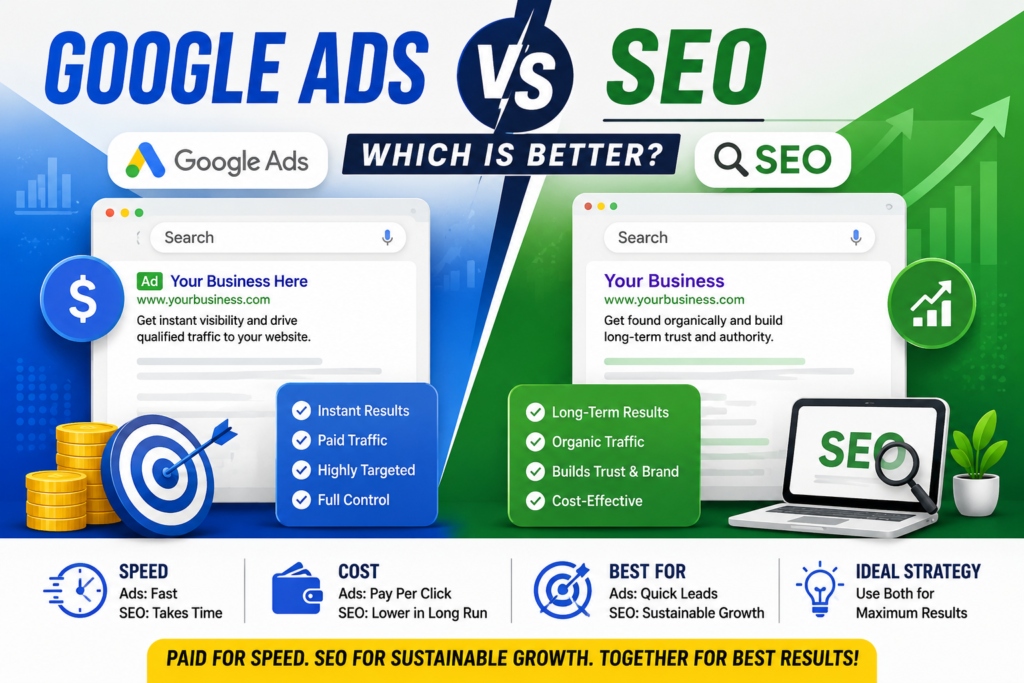
If you are planning digital marketing for your business, you may have one common question: google ads vs SEO — which one is better?
Both methods can help your business get visitors from Google. However, they work in different ways.
Google Ads is a paid method where you pay to show your advertisements to people searching for specific keywords. SEO, or Search Engine Optimization, is the process of improving your website so it can appear naturally in Google search results.
This makes the google ads vs SEO comparison important for business owners, students, freelancers, and digital marketers.
In this blog, we will understand google ads vs SEO, their benefits, differences, cost, results, and which option may be better for your business.
Google Ads is an online advertising platform from Google.
Businesses can create advertisements and show them to people who are searching for products, services, or information.
For example, if you search for “digital marketing course in Delhi”, you may see paid advertisements at the top of the search results.
The business pays when people interact with the advertisement, depending on the campaign and bidding setup.
One major Google Ads benefit is that you can start getting visibility quickly.
If your campaign is properly set up, your advertisement can appear in front of potential customers soon after the campaign starts.
This is one reason why many businesses consider Google Ads when comparing google ads vs SEO.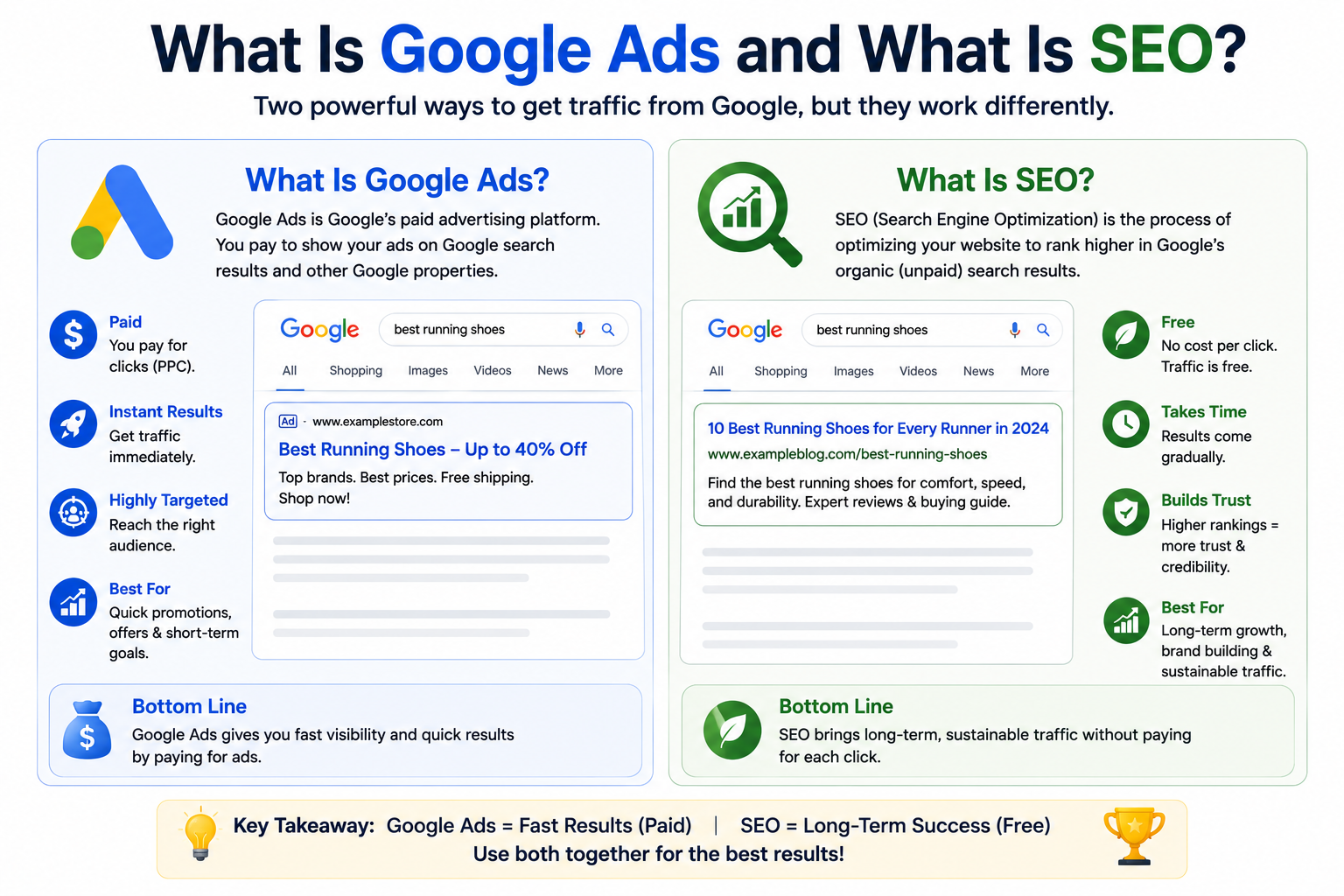
SEO means Search Engine Optimization.
SEO helps improve a website so that search engines and users can understand the content better.
SEO can include:
The main SEO benefit is that you can attract visitors from organic search results without paying for every click.
For example, if you have a blog about digital marketing and your page ranks for a useful keyword, people may visit your website whenever they search for that topic.
Therefore, google ads vs SEO is not simply about paid marketing versus free marketing. SEO also requires time, content, planning, and effort.
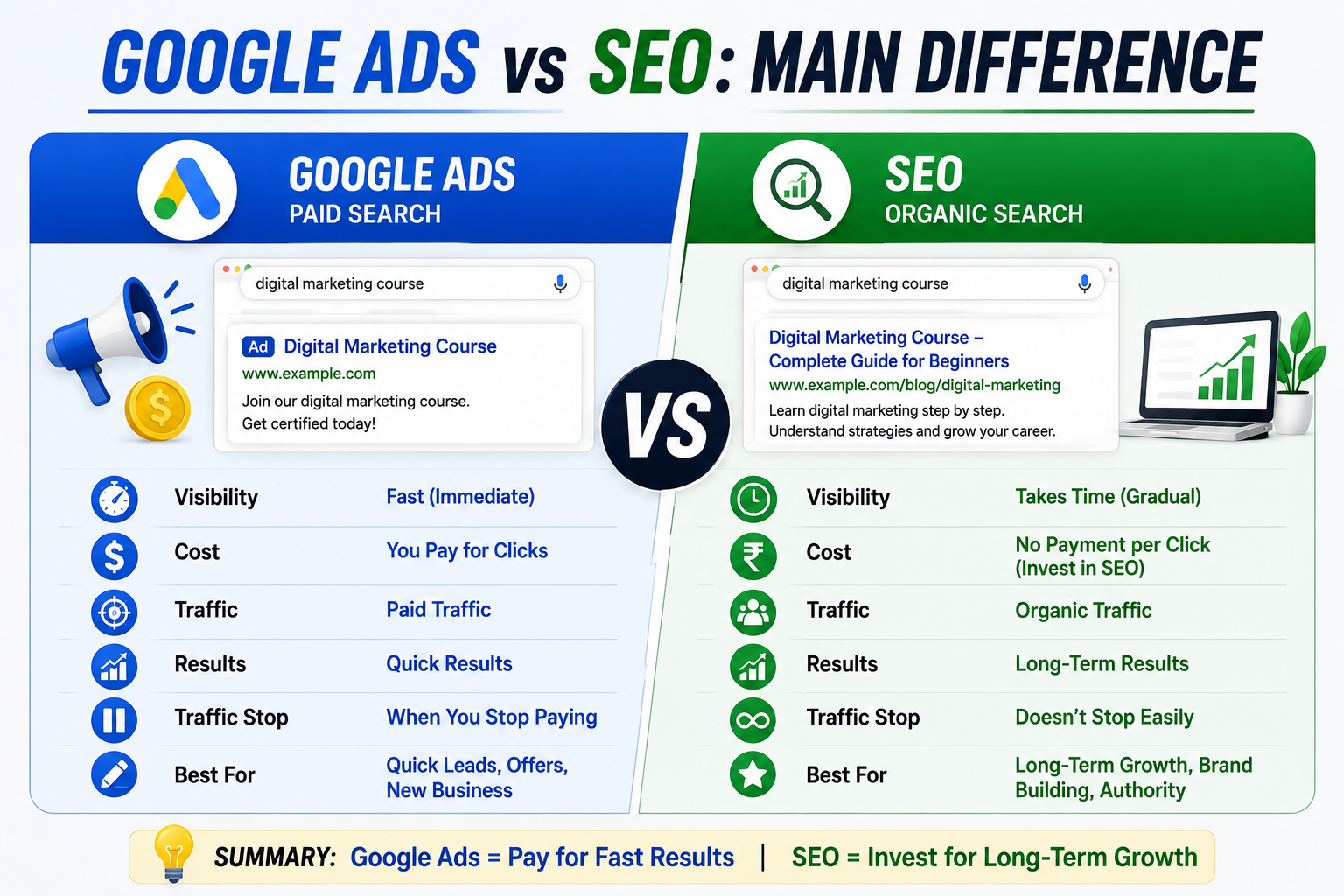
The biggest difference in google ads vs SEO is how your website gets visibility.
With Google Ads, you pay for advertising space.
With SEO, you work on your website and content to improve your organic visibility.
Here is a simple comparison:
| Google Ads | SEO |
|---|---|
| Paid marketing | Organic marketing |
| Can provide faster visibility | Usually takes more time |
| Requires advertising budget | Requires time and content effort |
| Useful for immediate campaigns | Useful for long-term growth |
| Traffic can stop when campaigns stop | Rankings can continue after work is done, although they can change |
The right choice depends on your business goals.
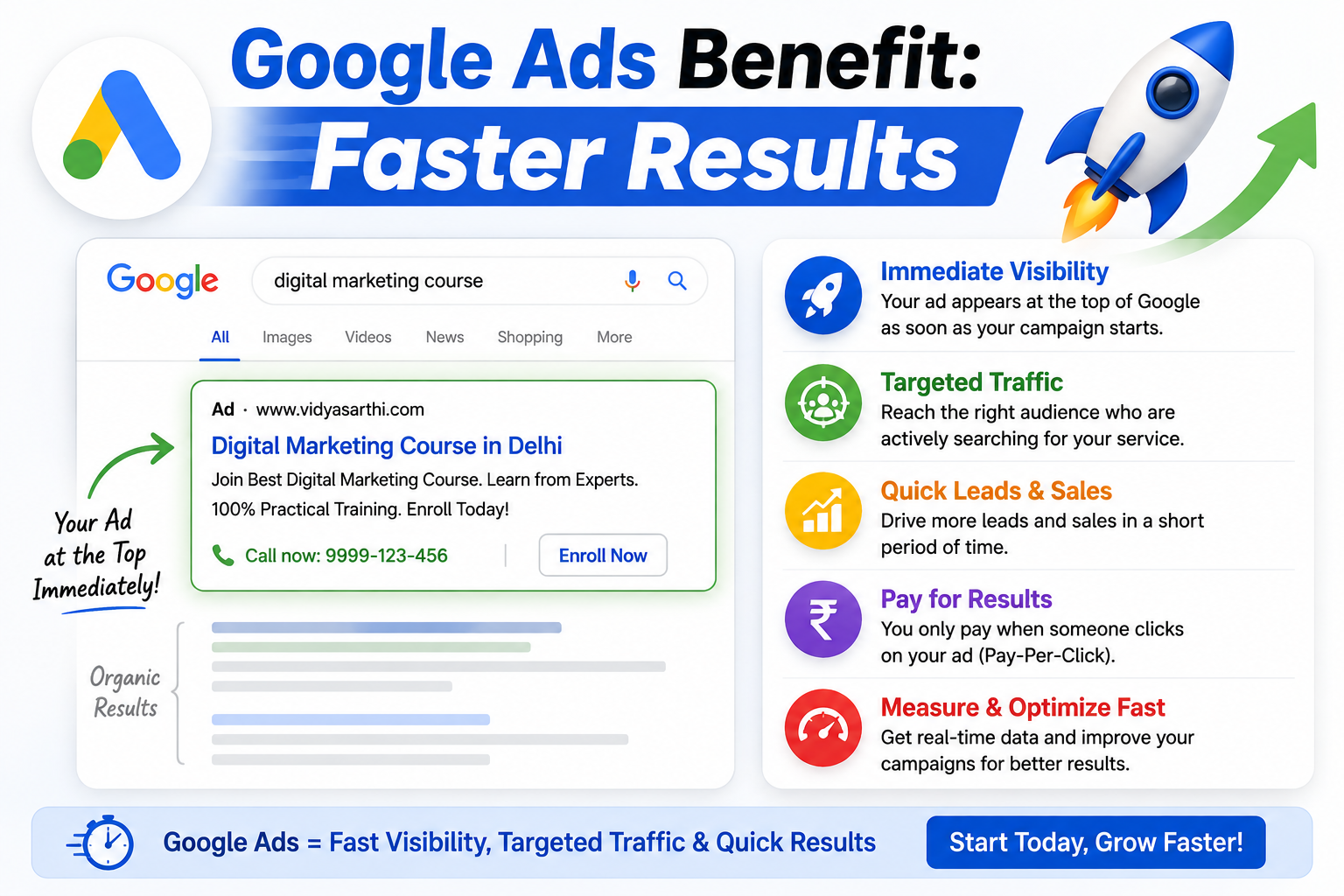
One major Google Ads benefit is speed.
Suppose you have recently launched a digital marketing course.
You want people to know about your course quickly.
Instead of waiting for your website to build organic rankings, you can create a Google Ads campaign for relevant searches.
This can help you reach people who are already searching for your sy google adservice.
That is wh vs SEO becomes important for businesses that need leads quickly.
However, faster visibility does not always mean better long-term results.
You still need a good advertisement, landing page, offer, and targeting strategy.
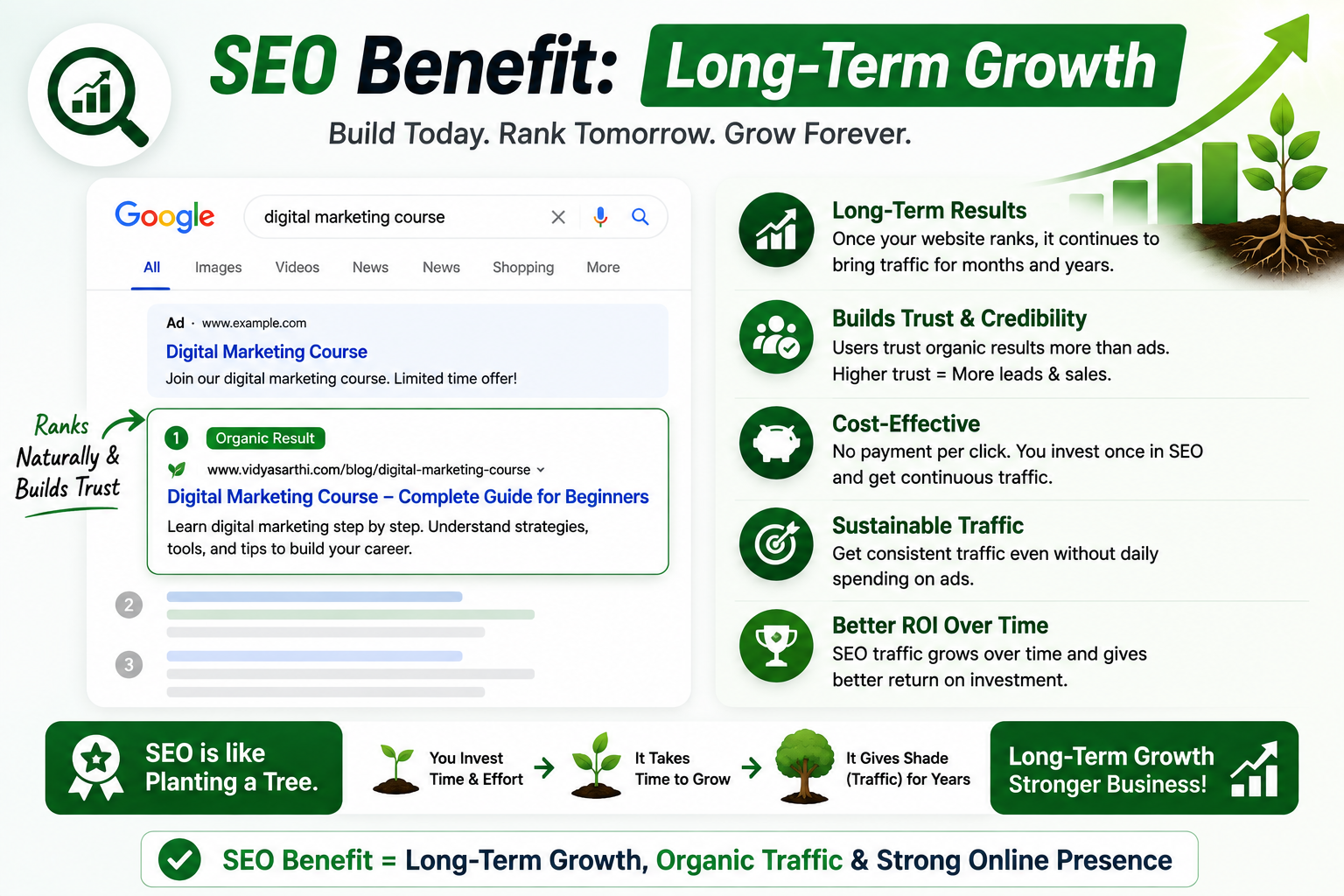
One major SEO benefit is the possibility of building long-term organic traffic.
Suppose you write a useful article called:
“How to Start Digital Marketing for Beginners in India.”
If your content provides useful information and performs well in search results, it can bring visitors over time.
This is an important SEO benefit for businesses that want to build their online presence.
SEO can also help build trust because users may find your website naturally while searching for information.
However, SEO does not give instant results in every case.
It requires regular content, optimization, patience, and consistency.
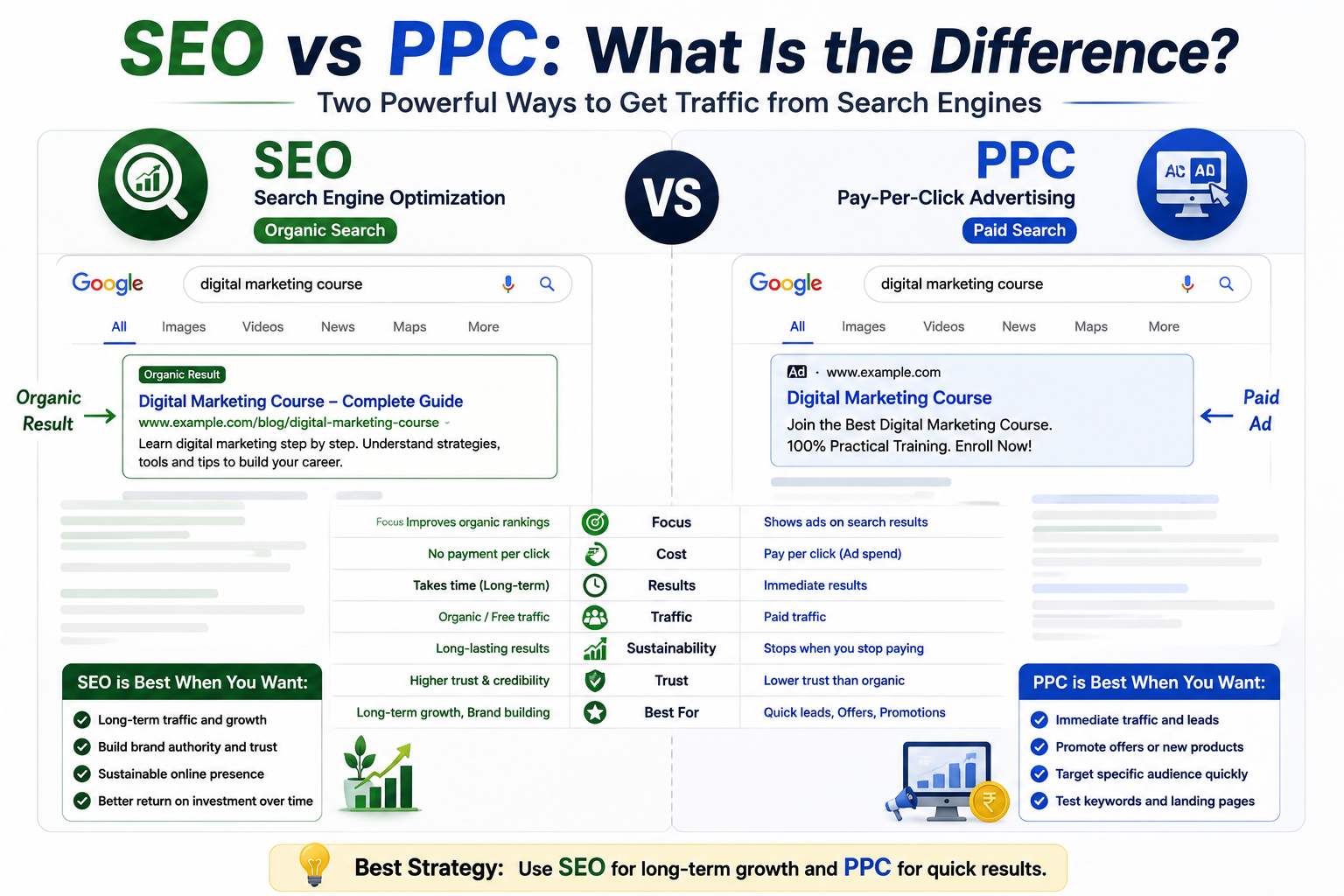
Many people also search for SEO vs PPC.
PPC means Pay-Per-Click advertising.
Google Ads is one example of PPC marketing.
In simple words:
SEO = organic search traffic
PPC = paid search traffic
When comparing SEO vs PPC, the main question is whether you want to invest more in paid visibility or organic growth.
PPC can be useful when you want to promote a product, service, offer, event, or business quickly.
SEO can be useful when you want to build organic visibility over time.
This is another way to understand google ads vs SEO.
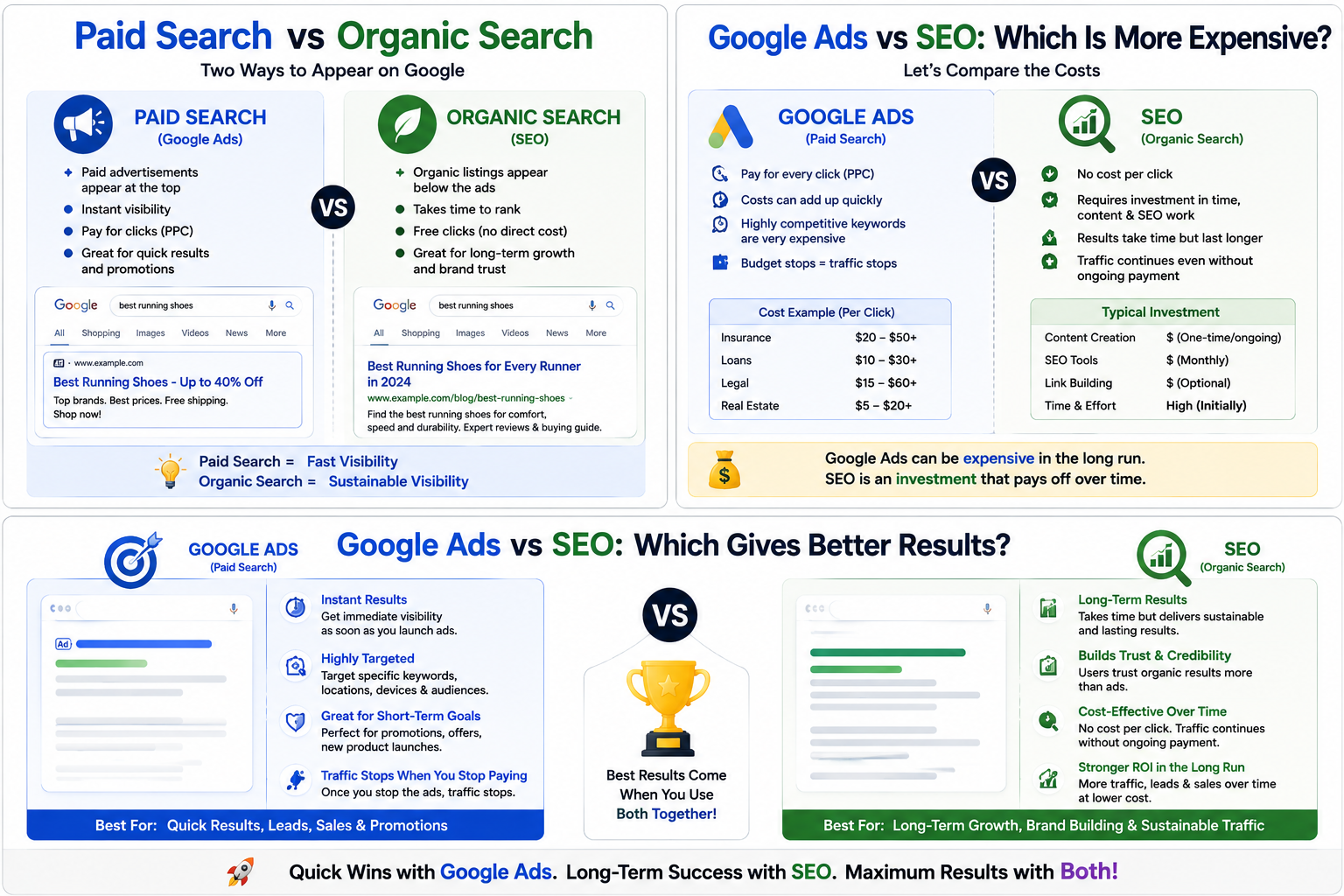
Another common term is paid search vs organic search.
Paid search means advertisements that appear because a business has paid for visibility.
Organic search means unpaid search results that appear because Google considers the page relevant and useful for the search.
For example, imagine you search for:
“best digital marketing course in Delhi.”
The advertisements shown at the top can be paid search.
The normal search results below them are organic search.
Both can bring visitors.
The difference is how you get that visibility.
In paid search vs organic search, paid search can provide quicker exposure, while organic search focuses on building visibility through SEO.
The answer depends on your business and strategy.
Google Ads requires an advertising budget.
You decide how much you are willing to spend and manage your campaign according to your goals.
SEO may not require payment for every visitor, but it still has costs.
You may spend money on:
So, in the google ads vs SEO comparison, it is wrong to say that SEO is completely free.
SEO requires investment in time, skills, content, and website improvements.
There is no single answer.
It depends on what you want.
If you want quick visibility, Google Ads can be useful.
If you want to build organic traffic for the long term, SEO can be useful.
If you want both short-term and long-term growth, you can use both.
For example, a business can use Google Ads to generate leads while working on SEO to build organic traffic.
This combined strategy can make the google ads vs SEO decision easier.
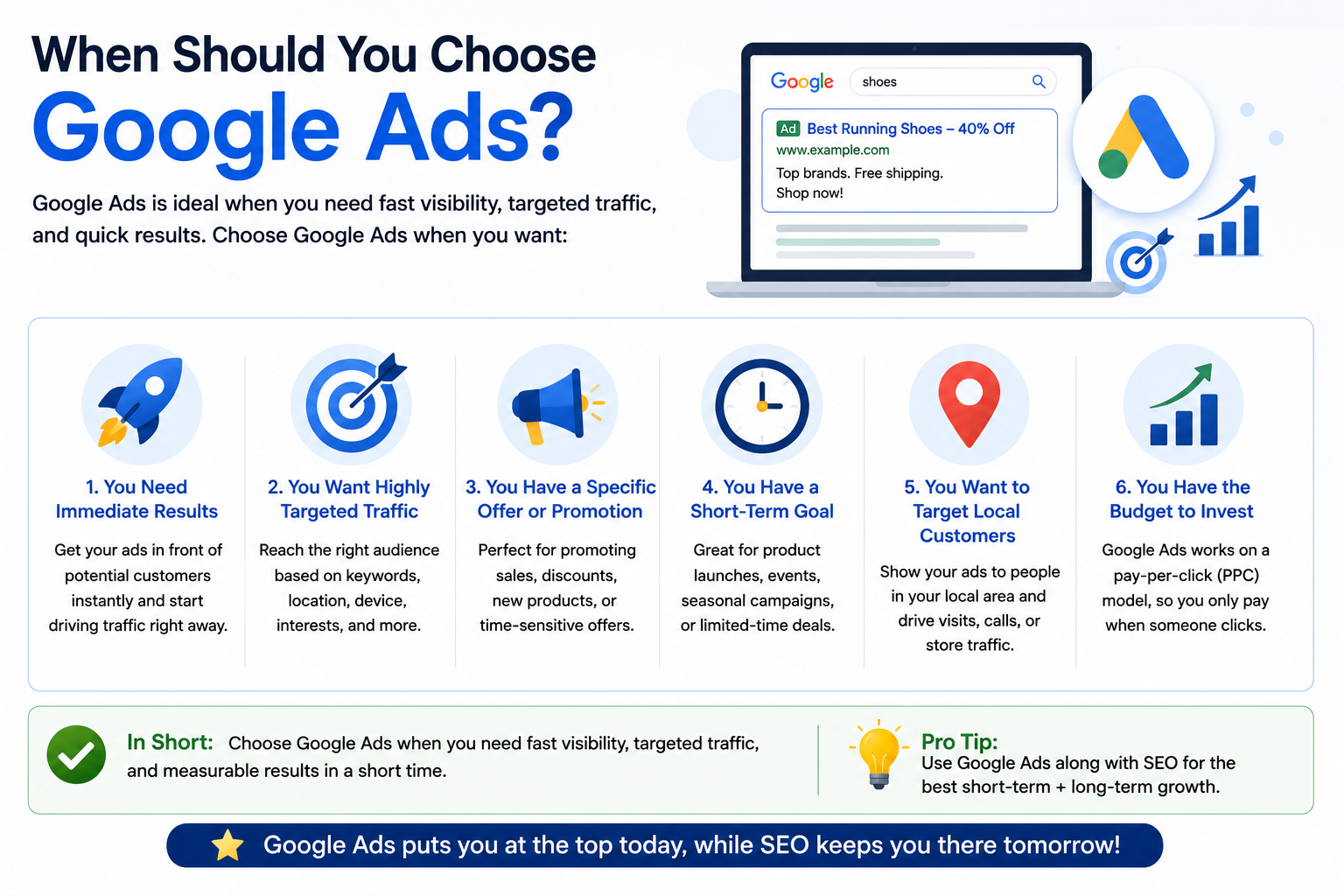
Google Ads may be a good option when:
The main Google Ads benefit is that you can put your offer in front of people who are actively searching for something related to your business.
But remember that good results depend on campaign setup, keywords, advertisements, landing pages, and budget management.
SEO may be a better option when:
The biggest SEO benefit is that good content can continue bringing organic visitors after it has been published.
However, SEO needs patience.
You should not expect every page to rank immediately.
The Yoast guide also recommends starting with keyword research, using clear headings, writing for users, adding internal links, optimizing images, and keeping content easy to read.
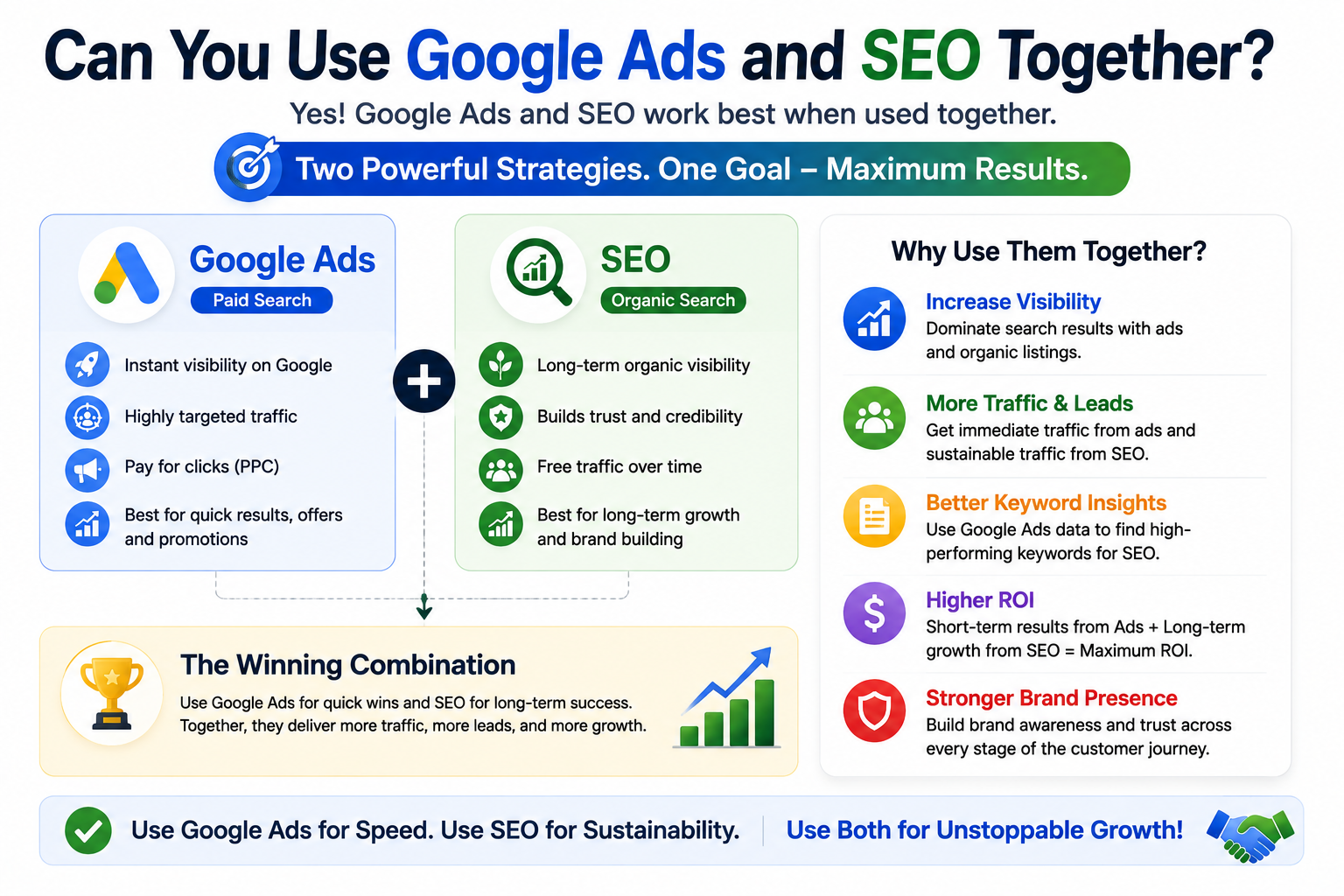
Yes.
In fact, businesses can use both methods as part of their digital marketing strategy.
For example:
Google Ads: Bring immediate traffic and leads.
SEO: Build organic traffic over time.
This approach giv businesses two different ways to reach potential customers.
Instead of asking only google ads vs SEO, you can ask:
“How can I use Google Ads and SEO together?”
For a new business, Google Ads can help test which keywords and offers attract customers.
The data and customer questions can also give ideas for future SEO content.
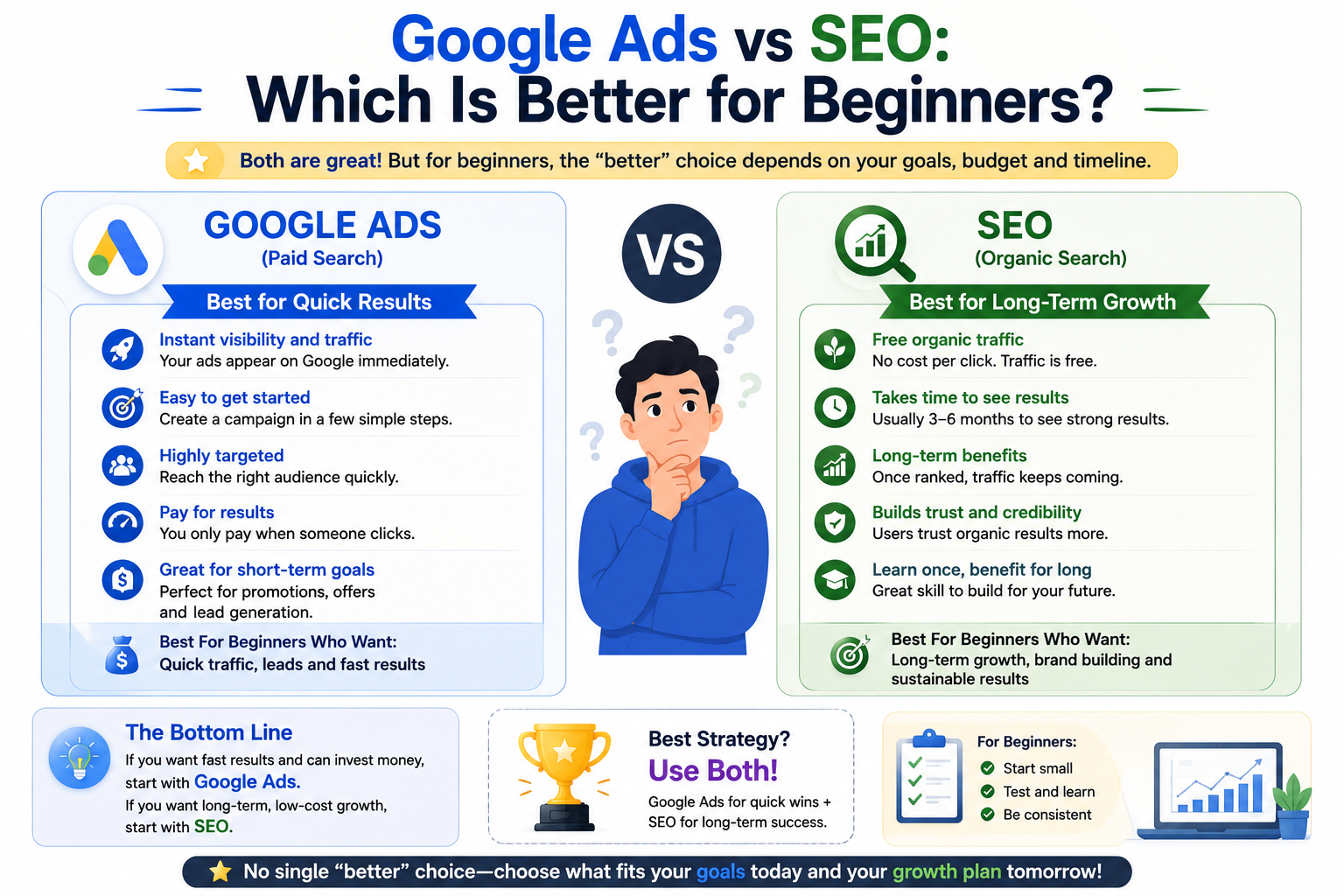
If you are a beginner, first understand your goal.
If your goal is to learn paid advertising, start by learning Google Ads.
If your goal is to learn organic search and content optimization, start with SEO.
If you want to become a complete digital marketer, learn both.
Understanding google ads vs SEO can help you understand two important parts of digital marketing.
You can also learn other areas such as:
Digital marketing is divided into many parts, and each skill can support the other.
So, google ads vs SEO — which is better?
There is no one answer for every business.
Google Ads can be useful when you want faster visibility and have a budget for paid advertising.
SEO can be useful when you want to build organic traffic and long-term online visibility.
The Google Ads benefit is faster paid visibility.
The SEO benefit is the opportunity to build long-term organic traffic.
When comparing SEO vs PPC or paid search vs organic search, remember that both strategies have their own purpose.
The best strategy depends on your business, budget, goals, audience, and timeline.
If you have the resources, using both Google Ads and SEO can be a strong digital marketing strategy.
Start with your goal, understand your audience, and then choose the right strategy.
Want to learn Google Ads, SEO, social media marketing, YouTube marketing, and other digital marketing skills?
Vidya Sarthi is a digital marketing institute where you can learn practical digital marketing skills and understand how online marketing works.
Whether you are a student, beginner, freelancer, or business owner, learning digital marketing can help you understand important skills like Google Ads and SEO.
Start learning digital marketing with Vidya Sarthi and take your next step toward building your digital marketing career.
Delhi PG Crisis: How Digital Marketing Can Help Students Find Safer Accommodation Table of Contents Quick Summary Delhi’s PG crisis has raised concerns about student
Google Ads vs SEO: Which Is Better for Your Business? Item #1 Item #2 Item #3 Quick Summary: Google Ads vs SEO Google Ads vs

will AI-Generated YouTube Videos Get Monetized in 2027 Quick Read Summary AI can make YouTube video creation much easier by helping with scripts, voiceovers, visuals,

YouTube New Monetization Policy 2027: What Creators Need to Know Quick Read Summary YouTube monetization is changing with the growth of AI, automation, and mass-produced
Welcome to WordPress. This is your first post. Edit or delete it, then start writing!